Scam Alert: Fake SumUp Security Update Emails Circulating Among UK Businesses
Scammers are continuing to target UK businesses with increasingly realistic phishing emails, and one of the latest examples involves messages impersonating SumUp, a popular payment provider used by many small businesses.
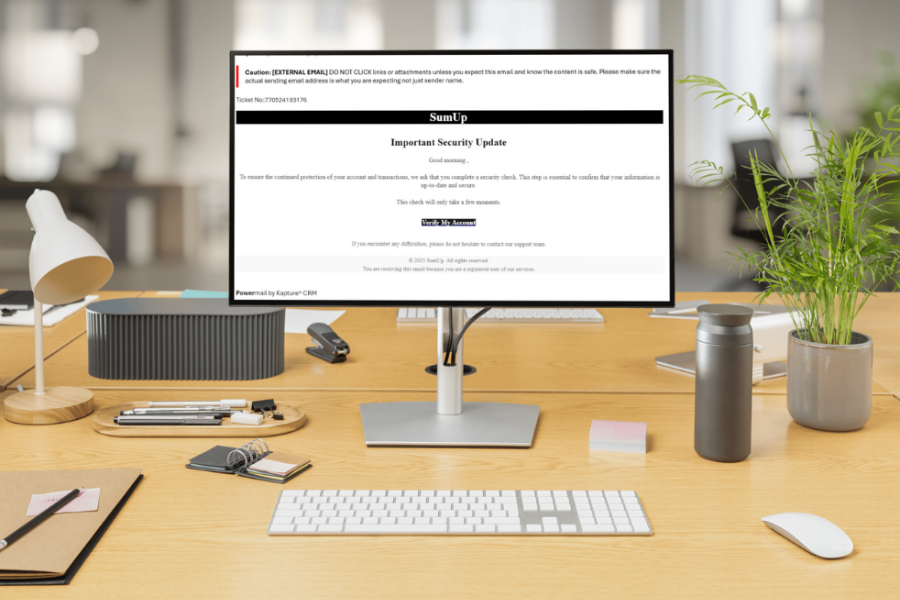
These emails claim to be an Important Security Update and encourage recipients to click a link to verify or secure their account. At first glance, they can look genuine, which is exactly why they are so effective.
What Is the SumUp Email Scam?
The scam email is designed to look like an official message from SumUp. It uses professional language, familiar branding, and often includes details such as a ticket or reference number to appear authentic.
The email typically warns that action is required to keep the account secure and reassures the reader that the process will only take a few moments. A prominent button or link is included, encouraging immediate action.
However, these emails are not sent by SumUp. They are sent from unrelated email addresses and link to fake websites designed to steal login details or other sensitive information.
Why This Scam Is So Convincing
SumUp is widely used by UK businesses, particularly sole traders, retailers, cafés, and service providers. Because many business owners regularly receive genuine emails from payment providers, a message like this does not immediately feel out of place.
Scammers rely on several common tactics:
· Creating urgency around account security
· Using trusted brand names
· Keeping the message vague to avoid specific questions
· Encouraging quick action before the recipient has time to think
These techniques are designed to catch busy business owners off guard.
How To Protect Yourself
There are several warning signs that can help you identify whether an email is a scam:
Check the sender email address
Even if the sender name says SumUp, always look at the full email address. If it does not come from an official SumUp domain, it is not genuine.
Look out for generic greetings
Scam emails often use phrases like “Good morning” rather than addressing you or your business by name.
Be cautious of unexpected security requests
If you are asked to verify your account without any prior notice or explanation, take a step back.
Avoid clicking links in the email
Instead of clicking, visit the official SumUp website by typing the address directly into your browser and check your account there.
Why Small Businesses Are Being Targeted
Phishing scams like this are a common way for criminals to gain access to financial accounts. If successful, they can lead to unauthorised transactions, data breaches, and significant disruption to a business.
Small businesses are often targeted because they may not have dedicated IT or security teams, making awareness and caution especially important.
Staying One Step Ahead
Scam emails are becoming more sophisticated, but understanding the common signs can help you stay protected. Taking a moment to pause, check the sender, and verify messages independently can make all the difference.
At SwitchboardFREE, we believe that staying informed is a key part of keeping your business running smoothly. Sharing scam warnings like this with your team can help prevent costly mistakes and keep your communications secure.